


New Senolytic Vaccine Extends Lifespan and Rejuvenates Immune Cells in Mice, Study Finds
A nanovaccine that helps the immune system clear senescent fat cells improves metabolic health and moderately extends the lifespan of naturally aged and obese mice.
Highlights
- The vaccine improves the metabolic health of obese mice and extends their lifespan by about 15%.
- The vaccine also improves the metabolic health of naturally aged mice and extends their lifespan by about 12%.
- The vaccine works by targeting a protein displayed on the surface of age-promoting senescent cells.
Senescent cells can act like troublemakers in the body, releasing inflammatory signals that disrupt neighboring cells and damage tissues. They tend to accumulate as we age and have been associated with several common chronic diseases, including arthritis, cardiovascular disease, type 2 diabetes, and Alzheimer’s disease.
Senolytics are compounds that selectively eliminate senescent cells. However, clearing these cells while sparing healthy ones remains a challenge, prompting researchers to explore more targeted senolytic approaches. One emerging strategy is senolytic vaccination, which trains the immune system to recognize and eliminate senescent cells.
In a new study published in Advanced Science, researchers in China developed a nanovaccine designed to rejuvenate aging immune cells and help them coordinate the clearance of senescent cells. The vaccine extended lifespan in both obese and naturally aged mice, improved metabolic health, and reduced fat-cell size. The findings offer support for targeting senescent cells to improve health and longevity.
Vaccine Extends Lifespan and Improves Blood Sugar in Obese Mice
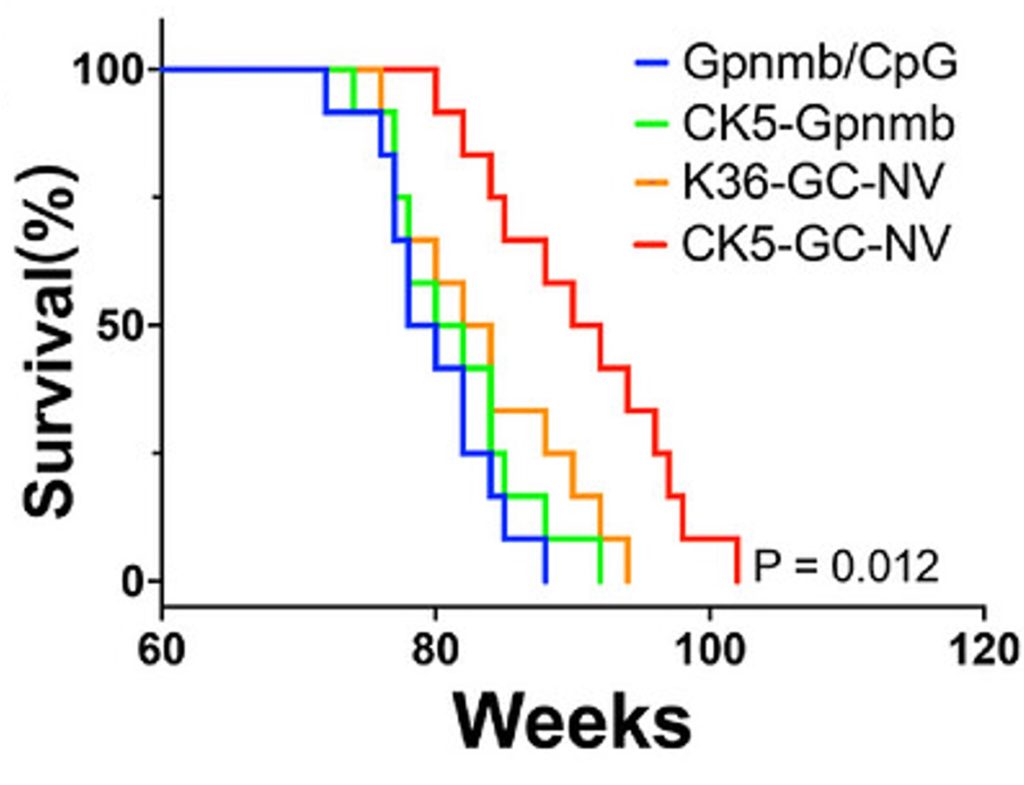
To test whether the vaccine could improve health under prolonged metabolic stress, the researchers studied mice fed a high-fat diet. They administered the vaccine when the animals reached 60 weeks and assessed metabolic outcomes at 70 weeks, when the mice were roughly equivalent in age to 52-year-old humans.
Mice receiving the nanovaccine lived about 15% longer and exhibited signs of improved metabolic health. For example, the vaccine enhanced glucose tolerance—the ability to manage a rise in blood sugar. Moreover, the fat cells of the vaccinated obese mice became smaller, and senescent cell markers were reduced in visceral fat tissue. These findings suggest that the removal of senescent cells improves metabolic health and longevity in obese mice.
Vaccine Extends Lifespan in Naturally Aged Mice
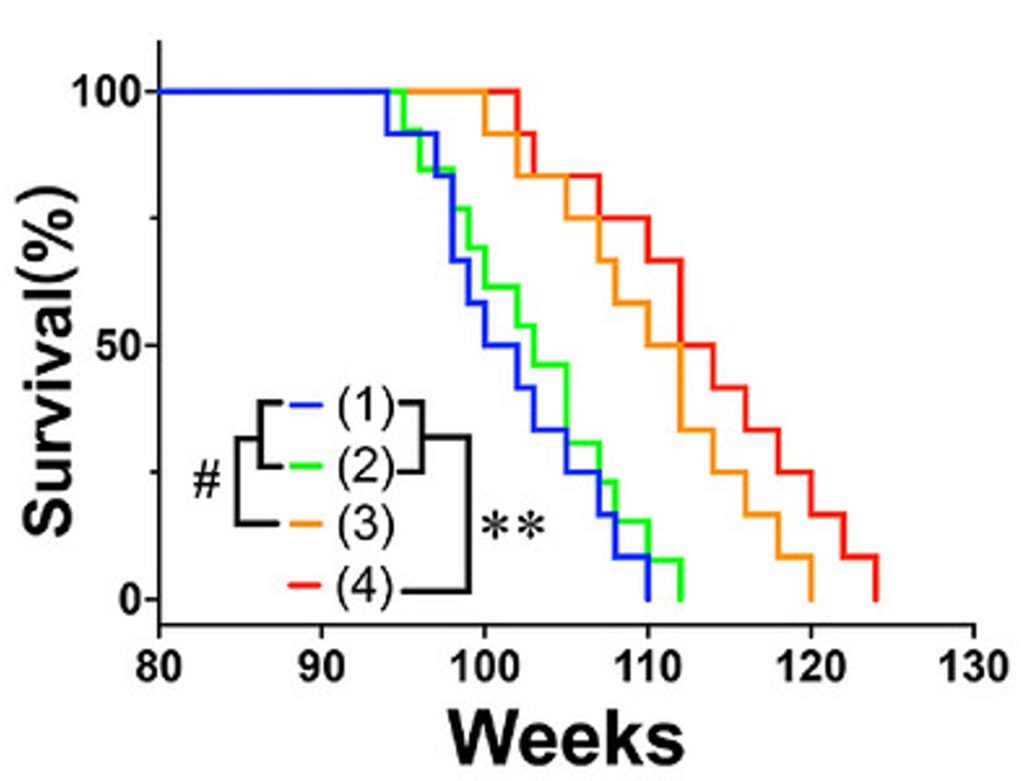
The researchers also tested whether the vaccine’s benefits extended to naturally aged mice fed a standard diet. They vaccinated the animals at 75 weeks of age, assessed their immune responses three weeks later, and evaluated metabolic health when they were roughly equivalent in age to 60-year-old humans (85 weeks).
Similar to the vaccinated obese mice, the vaccinated aged mice showed reduced senescence-associated markers in fat tissue and better blood-sugar regulation, including improved glucose tolerance. Importantly, vaccinated mice lived approximately 12% longer than untreated controls. Together, the findings suggest that the vaccine’s effects were not limited to diet-induced metabolic dysfunction.
How the Vaccine Works
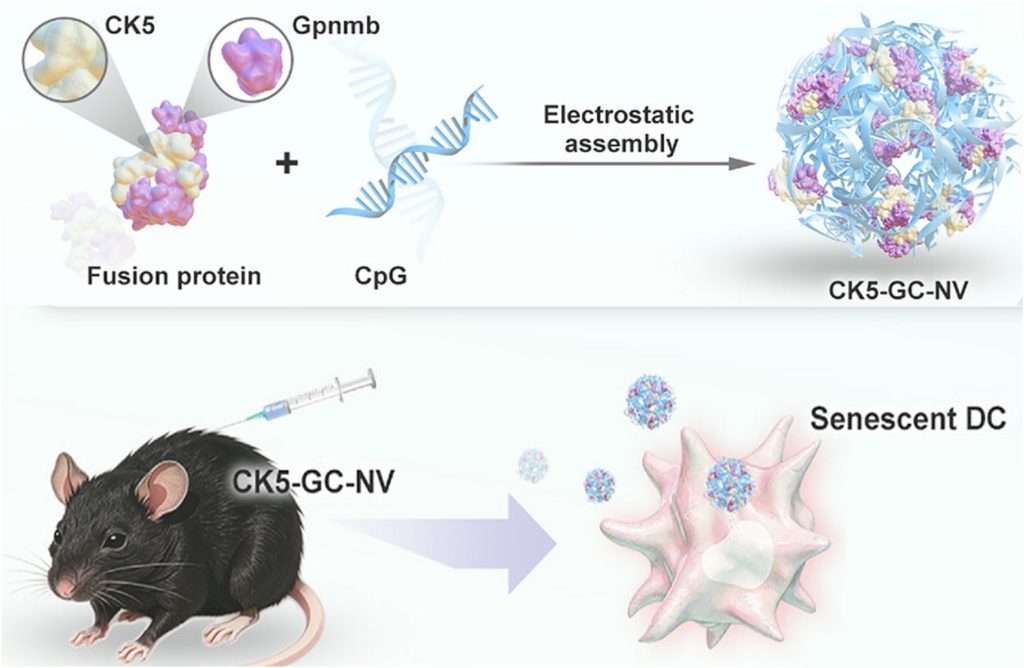
Nanovaccines use nano-sized particles (1 to 1000 nanometers) to deliver vaccine components. The vaccine developed by the Chinese researchers combines three components:
- Gpnmb: a protein found at elevated levels in the senescent cells being targeted.
- CpG: a short stretch of synthetic DNA that stimulates immune activity.
- CK5: an engineered protein scaffold that holds the vaccine together and helps rejuvenate immune cells.
The Process
When the vaccine is injected, immune cells called dendritic cells take it up and present fragments of Gpnmb to another class of immune cells known as T cells. This helps teach the T cells to recognize senescent cells displaying the Gpnmb fragment. Meanwhile, the CK5 scaffold reduces senescence-associated features in dendritic cells and improves their ability to activate T cells. CpG provides an additional activation signal that strengthens this response.
The activated killer T cells then recognize and destroy cells displaying the matching target. In the mice, this response promoted the clearance of senescent fat cells displaying Gpnmb. In other words, rather than directly killing senescent cells like a conventional senolytic drug, the vaccine recruits the immune system to do the job while helping repair a weakness in the immune response itself.
Can Senolytics Promote Human Health and Longevity?
The vaccine’s benefits in mice add to evidence that removing senescent cells may improve health and extend lifespan. Whether this approach can help people live healthier, longer lives, however, remains an open question. Human trials of senolytic drugs have produced encouraging biological signals, such as reducing senescent fat cells.
However, in a randomized trial involving 60 postmenopausal women, senolytics did not reduce bone breakdown. Still, a marker of bone formation increased temporarily, and exploratory analyses suggested greater benefits among women with higher baseline senescence-associated markers. These findings raise the possibility that treatment may help some people more than others, but that hypothesis requires confirmation. Similarly, a placebo-controlled pilot study involving 12 people with lung disease found no meaningful differences in lung function, physical function, or frailty between treatment groups.
Together, these results make senolytics a promising, but still experimental, approach to improving health during aging. Reducing senescence markers is an important step, but it is not equivalent to preventing disease, preserving independence, or prolonging life. None of these human trials demonstrated lifespan extension. The new vaccine offers another strategy worth investigating, but larger, longer-term trials must establish whether its benefits translate to people and whether they outweigh the risks.
 Comments